
Vietnamese Cuisine
What is Banh Bao? A Delicious Dish You Must Try When Visiting Vietnam
When talking about Vietnamese cuisine, besides familiar dishes such as bun cha, pho, and banh mi, banh bao is also a popular and beloved food. With its soft, fluffy outer layer, diverse fillings, and delicious flavor, bánh bao has become a favorite choice for many people.
What is banh bao? Where did it originate? Why do so many people love it? Let’s explore these questions in the article below.
What is Banh Bao?
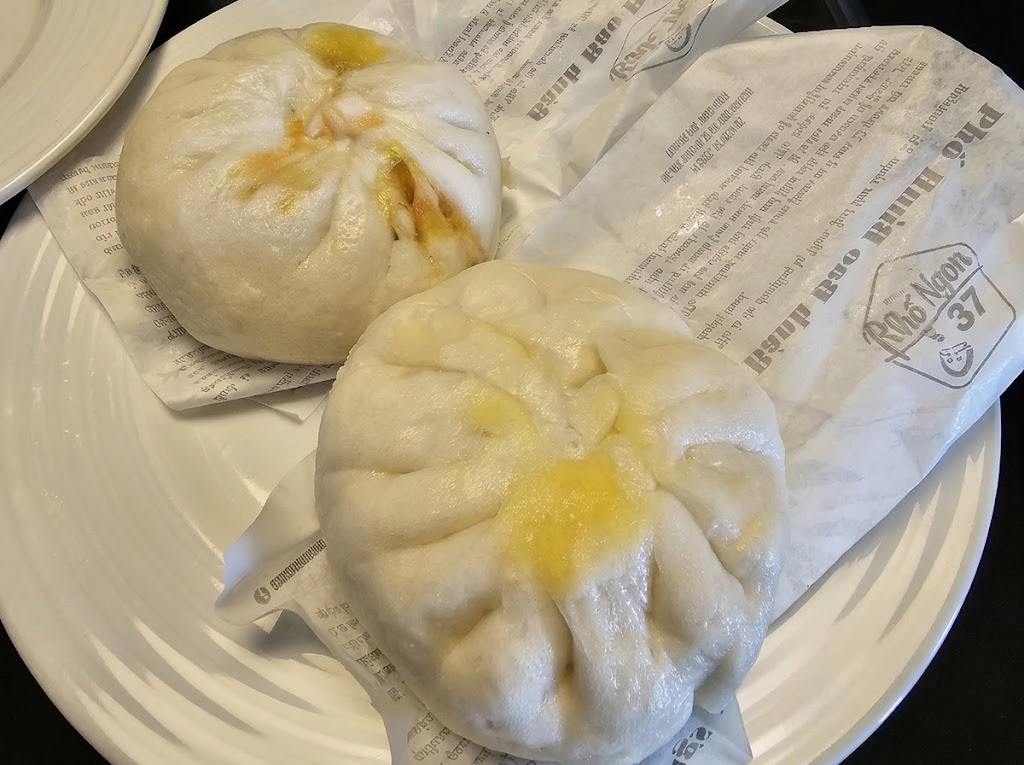
Banh bao is a type of steamed bun made mainly from fermented wheat flour, which is then shaped and cooked by steaming. It usually has a soft, white, fluffy outer layer with a distinctive light and airy texture. The inside can contain various types of fillings, such as meat, eggs, vegetables, mung beans, or vegetarian ingredients.
Unlike many other types of pastries that are baked or fried, traditional banh bao is cooked using the steaming method. As a result, the bun maintains its soft, moist texture, natural flavor, and is easy to enjoy.
The Origin of Banh Bao
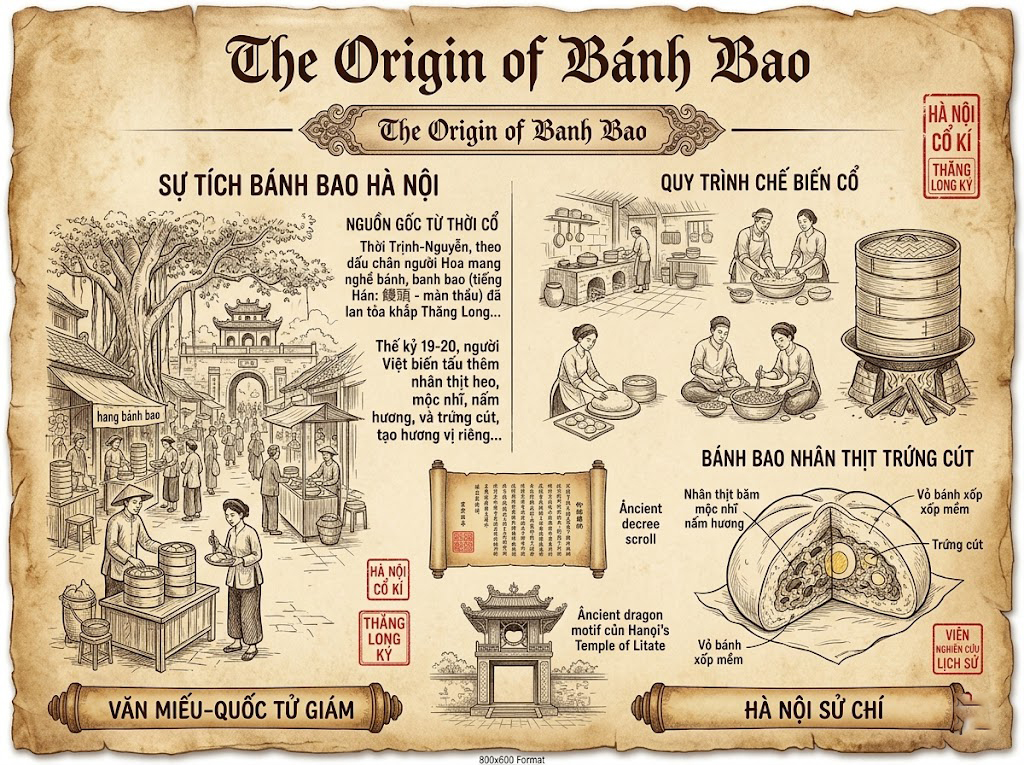
Few people know that behind the soft white outer layer and delicious filling of the familiar banh bao lies a long historical story that has lasted for thousands of years. According to many legends, this dish originated during the Eastern Han Dynasty and was created by the famous physician Zhang Zhongjing, one of the renowned medical sages of ancient China. Initially, the dish was not only made to be enjoyed but also to help people survive the harsh cold weather and food shortages at that time.
During the Three Kingdoms period, bánh bao continued to appear in a famous legend associated with Zhuge Liang. After the southern campaign and the event known as the “seven captures and seven releases” of Meng Huo, the Shu army faced difficulties on their way back to Chengdu because they could not cross the Lu River, where the water was turbulent and dangerous.
According to the legend, Meng Huo believed that crossing the river required a sacrificial offering of 50 human heads. However, Zhuge Liang did not want to sacrifice the lives of more soldiers, so he came up with a creative alternative. He ordered the making of buns shaped like human heads, with a flour-based outer layer and meat filling inside, and used them as a substitute for the sacrifice.
These buns were called “Mantou” (meaning “barbarian heads” or “Man people’s heads”). Over time, the dish gradually changed in shape and flavor, eventually becoming the popular banh bao we know today.
Today, banh bao is no longer just a traditional Chinese dish but has become a familiar part of Asian culinary culture. In Vietnam, Japan (Nikuman), Korea, Thailand (Salapao), and Myanmar (Pauk-si), bánh bao has its own unique versions that reflect the characteristics of each country.
From a dish connected to an ancient historical story, banh bao has crossed borders and time to become a symbol of creativity, adaptation, and the essence of Asian cuisine.
2 Ingredients of Traditional Banh Bao
A banh bao usually consists of two main parts:
1. The Outer Layer (Bun Skin)
The outer layer of banh bao is made from:
- Wheat flour
- Yeast
- Water or milk
- Some ingredients that create a soft texture and pleasant aroma
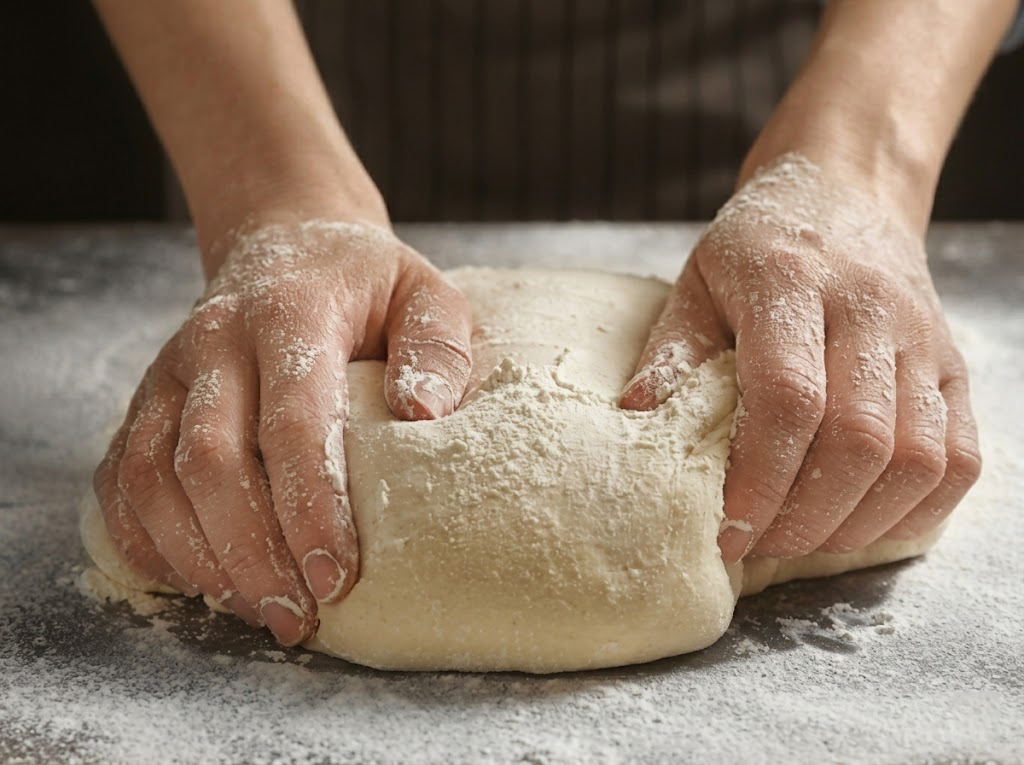
After the dough is kneaded and left to ferment, it expands to create a soft, elastic outer layer with its characteristic white color.
2. The Filling
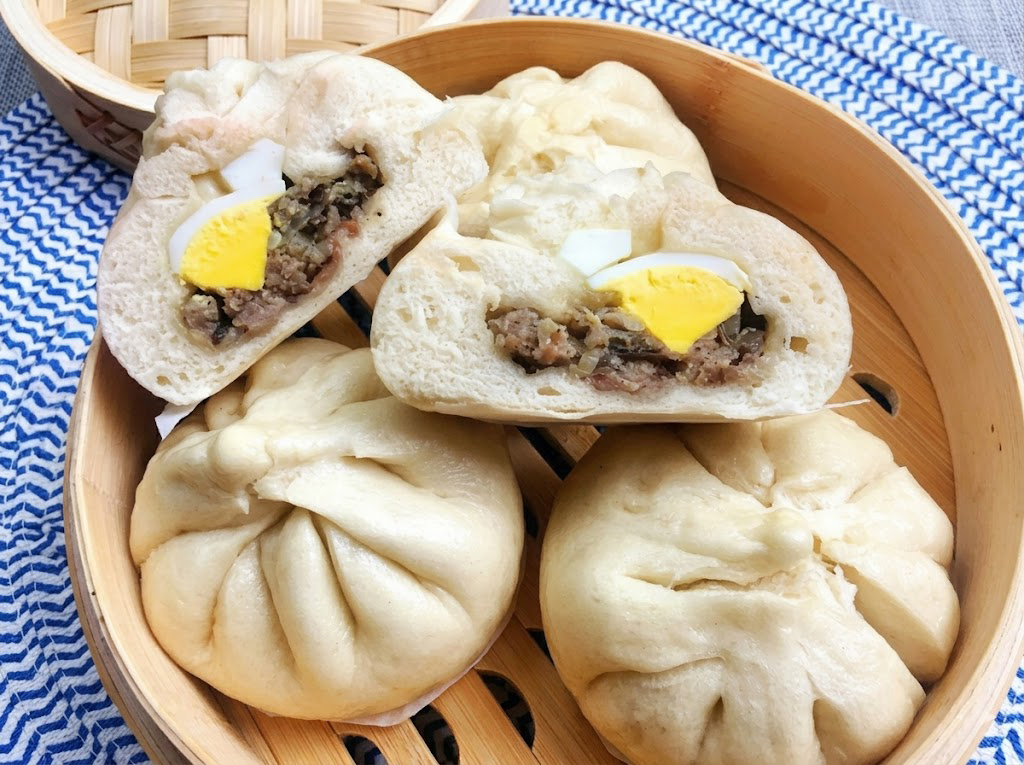
The filling of bánh bao is very diverse. The most common ingredients include:
- Minced pork
- Wood ear mushrooms
- Glass noodles
- Quail eggs
- Onion, pepper, and seasonings
In addition, there are many other types of banh bao, such as vegetarian banh bao, mung bean-filled banh bao, salted egg custard (kim sa) banh bao, or vegetable-filled banh bao.
Why is Banh Bao Loved?
Banh bao has become a popular dish thanks to many advantages:
- Convenient: It can be enjoyed as a breakfast dish or a quick snack.
- Easy to store: It can be reheated by steaming before eating.
- A variety of flavors: There are many types of banh bao, such as meat-filled banh bao, vegetarian banh bao, char siu banh bao, and salted egg custard (kim sa) banh bao.
- Rich in energy: The flour-based outer layer and fillings provide a source of energy for the body.
Conclusion
Banh bao is a traditional steamed bun with a soft, fluffy outer layer and a variety of fillings. Originating from Chinese cuisine, it has been adapted to suit many different cultures.
Not only is it a convenient dish, but banh bao also represents the cultural exchange of cuisine and has become a familiar part of daily life for many people.
With its diverse ingredients and flavors, if you have the chance to visit Vietnam, be sure to try Vietnamese banh bao!
If you have any questions regarding Vietnamese banh bao or anything else about Vietnam that you would like to learn more about, please contact us here.
Expand:Things you need to know about Vietnamese cuisine, What is pho? What is bun cha? What is banh mi?